
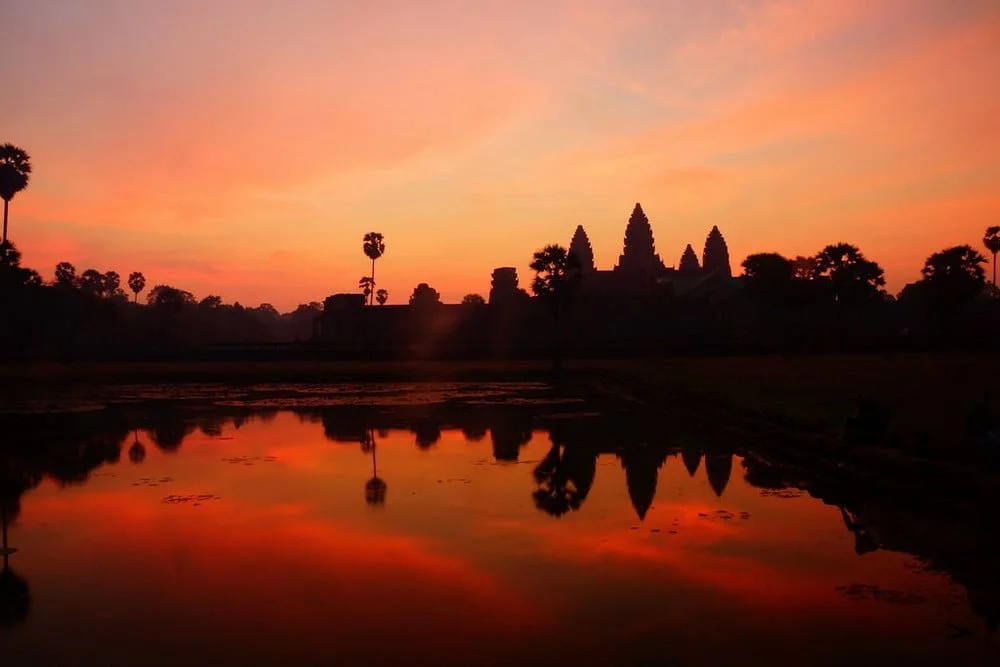
Picture this: you’ve flown 14 hours, landed in Siem Reap at midnight, set your alarm for 4:30 AM because someone online said sunrise at Angkor Wat changes your life. You arrive at the west entrance in pre-dawn darkness, already sweating in 30°C humidity, and walk straight into a crowd of 600 other tourists who read the same post. The photos you get look exactly like everyone else’s.
That scenario plays out every morning during peak season. It’s entirely avoidable with specific planning. This guide covers what actually matters — tickets, timing, temple order, and the decisions that separate a frustrating day from a genuinely memorable one.
Angkor Wat Ticket Prices and Where to Buy Them
The Angkor Archaeological Park runs on a pass system managed by Angkor Enterprise, the official ticketing authority. You cannot buy tickets at the temple gates. The ticket center sits on the road from Siem Reap toward the main complex — every tuk-tuk driver knows it as the checkpoint. As of 2026, prices are:
| Pass Type | Price (USD) | Validity Window | Best For |
|---|---|---|---|
| 1-Day Pass | $37 | Single calendar day | Transit visitors, cruise stopovers |
| 3-Day Pass | $62 | Any 3 days within 10 days | Most first-time visitors |
| 7-Day Pass | $72 | Any 7 days within 30 days | Extended stays, serious explorers |
Children under 12 enter free. Payment accepts USD cash and major credit cards. Your photo gets taken at purchase — passes are non-transferable. The center opens at 5:00 AM specifically to accommodate sunrise visitors.
Is the 3-Day Pass Worth the Extra $25?
Yes, for most first-time visitors. The price gap between a 1-day and 3-day pass is $25. One extra day lets you reach Banteay Srei (25 km from the main complex), revisit key temples in better morning light, and avoid the frantic pace that leaves single-day visitors feeling like they barely touched the surface. The 7-day pass makes sense only if you’re spending the bulk of a week specifically on temple exploration — add Koh Ker and Beng Mealea to that itinerary and it earns its value.
Buy Your Pass the Evening Before Sunrise Visits
The checkpoint on the road to Angkor Wat verifies passes before entry. Visitors who plan to arrive at 5:30 AM for sunrise can buy their pass the afternoon before to skip the 5 AM queue. The Angkor Enterprise center closes around 5:30 PM, so this works easily if you’re arriving in Siem Reap the day before.
Best Time to Visit — Month and Hour Are Separate Decisions
Angkor Wat sits at 13 degrees north of the equator. It’s warm every month of the year, never cold. The dry and wet season split is sharp, and the difference in experience between a December visit and an August visit is substantial. But the month you choose and the hour you arrive each shape your day in different ways — get both right and the experience is dramatically better.
By Month: The Honest Breakdown
November through February is the standard recommendation, and it holds up. Temperatures run 26–30°C, humidity drops to manageable levels, and roads stay dry. December and January see the heaviest tourist volumes — Angkor Wat during the Christmas and New Year period is genuinely packed, with wait times at the reflecting pond and tour groups filling every interior corridor.
March and April push toward 38–40°C by midday. Not impossible, but physically taxing. Visitors consistently underestimate how quickly climbing stone temple staircases in that heat degrades the experience.
May through October is monsoon season. Don’t rule it out. Rain typically arrives in afternoon bursts, not all-day drizzle. Temples read differently surrounded by lush green vegetation, crowds thin considerably, and the moat at Angkor Wat fills completely — some photographers prefer the reflection pool at this level. The downside: minor temple paths flood after heavy storms, and outlying sites occasionally close in early October.
The honest sweet spot: mid-November through early December, or late January through February. Best weather, crowds that are heavy but not oppressive, and hotel prices that haven’t hit peak-season levels yet.
By Hour: This Changes More Than the Month
The main Angkor Wat entrance faces west. The temple sits in silhouette against the sunrise — that’s the image. The famous shot comes from the northwest corner of the north reflecting pond: temple outline against a pink-orange sky at roughly 5:50–6:10 AM depending on the month. Arrive by 5:30 AM to position before the crowd settles in.
Tour buses arrive after 8 AM. The 10 AM to 2 PM window is the worst — peak heat, peak crowds, flat overhead light that kills texture in photos. Return visits in the late afternoon (4:00–5:30 PM) catch warm sidelight on the bas-relief galleries inside the main complex. Pre Rup temple, a pyramid-style structure about 10 minutes by tuk-tuk from the main gates, is the correct call for sunset. Its elevated terraces give unobstructed western views. Skip Phnom Bakheng — visitor caps and a steep climb produce a mediocre experience by comparison.
How Hot Does It Get Inside the Temples
Hotter than outside. Stone retains heat. The inner galleries at Angkor Wat trap air with almost no circulation. Plan for 15–20 minutes inside gallery passages before stepping back into shade. Carry at least 1.5 liters of water per person per morning session — dehydration affects judgment faster than most visitors expect.
Which Temples to Prioritize on a First Visit
The Angkor Archaeological Park covers roughly 400 square kilometers. Dozens of temples. Most visitors have one to three days. This ranked list focuses on structural condition, visual impact, and how distinct each site feels from the others:
- Angkor Wat — The 12th-century main temple, built under Khmer King Suryavarman II. The inner gallery bas-relief stretches 800 meters — the longest continuous carved narrative in the world. Minimum 3 hours. The upper sanctuary (third level) allows only 100 visitors per timed slot; arrive at the inner enclosure by 7:30 AM during peak months or slots fill before 9 AM.
- Bayon — At the center of the walled Angkor Thom city. Its 54 towers carry 216 carved stone faces, believed to represent the Bodhisattva Avalokitesvara. Completely different in character from Angkor Wat. Most visitors rush through in 45 minutes; 90 minutes lets you reach the quieter upper terraces where the faces look best in morning light.
- Ta Prohm — Left partly unrestored, with massive strangler fig and silk cotton tree roots growing directly through the stonework. The “Tomb Raider temple” framing is tired but accurate as a visual shorthand. Crowds are heavy here — arriving before 8 AM makes a tangible difference.
- Banteay Srei — Smaller than the main complex but widely considered the finest stone carving in all of Angkor. Built from pink sandstone. The detail level in the decorative panels is genuinely remarkable. Requires a 25 km trip from the main complex — plan a dedicated half-day.
- Pre Rup — 10th-century state temple, pyramid form, best sunset viewing in the park.
- Preah Khan — A large, partially ruined complex with fewer crowds than Ta Prohm. Good alternative if you want overgrown jungle atmosphere without the tourist volume.
- Baphuon — Often skipped. A restored sandstone pyramid within Angkor Thom with a 200-meter elevated causeway approach. Worth 45 minutes if you have a 3-day pass.
Getting Around the Park
Hire a private tuk-tuk for the day. At $15–20 USD, it covers the full circuit, waits at each temple, and drivers typically know which side entrances avoid the main tour bus queues. Bicycles rent for $2–3/day and work on the main 17 km paved circuit if heat isn’t a deterrent. Electric bikes run around $10/day. Skip the car — narrow roads and the need to stop frequently make it the wrong tool.
What to Wear: One Rule Enforced More Than Others
Shoulders and knees covered is mandatory, and Angkor Wat enforces it. Guards at the inner sanctuary stairs will turn visitors away without warning — this isn’t a suggestion at actively-worshipped sites. Lightweight linen or cotton long pants beat shorts here for a secondary reason: the open terraces offer no shade and sun exposure on stone is intense.
Best Footwear for Temple Visits
Closed-toe shoes you can slip off quickly. You’ll remove footwear at several sites, including inside Angkor Wat’s main tower and at active Buddhist shrines. Flip-flops become a liability on the original 65-degree stone stairs at the upper sanctuary — roped handrails were added, but the angle is steep. A lightweight trail runner or leather sandal with a back strap handles all conditions.
What Not to Bring
Drones require a filming permit obtained in advance through Cambodia’s Ministry of Culture — showing up with one unregistered results in confiscation. Flash photography is off inside all sanctuaries. Selfie sticks are banned in the interior gallery sections of Angkor Wat to protect the bas-relief panels.
Six Mistakes That Cost First-Time Visitors a Full Day
Can You Buy Tickets at the Temple Gate?
No. The checkpoint stops all vehicles before the main complex. Visitors who assume they can pay on arrival lose 30–60 minutes backtracking to the Angkor Enterprise center. Buy the evening before if you’re doing sunrise — this is the single most common avoidable delay.
Is One Day Enough to See Angkor Wat?
One day covers Angkor Wat itself plus Bayon and Ta Prohm if you start early and move with intention. That’s a meaningful visit — not rushed if you’re selective. It does not cover Banteay Srei, Pre Rup at sunset, or any outlying temples. Most visitors who choose the 1-day pass wish they’d booked 3 days while still at the planning stage, not after.
Is Visiting During Monsoon Season a Bad Idea?
Not categorically. May through August typically brings afternoon showers rather than continuous rain. Temples remain accessible through most of the season. The genuine risks are specific: certain ground-level bas-relief sections at Ta Prohm and Preah Khan flood after heavy storms, and a few rural access roads become impassable in September and October. Check conditions with your hotel on arrival rather than canceling outright.
Do You Need Long Clothing at Every Temple?
The dress code applies park-wide, but enforcement is inconsistent outside the major temples. Angkor Wat and Bayon check reliably. Carry a lightweight sarong or scarf as a backup — it weighs nothing in a daypack and resolves any ambiguity at temple entrances without requiring a wardrobe change.
Is the Water Safe to Drink?
Bottled water only throughout Siem Reap. Vendors at temple entrances charge $0.50–1.00 USD per bottle. Most hotels provide large refillable dispensers in the lobby — fill a reusable bottle before leaving each morning. In temperatures above 35°C with significant walking and stair-climbing, 1.5 liters per person runs out faster than expected.
Can You Reach the Top of Angkor Wat’s Central Tower?
The third-level upper sanctuary requires a timed entry slot — maximum 100 visitors per slot, distributed on a first-come basis from the inner enclosure each morning. Slots fill before 9 AM during high season. Arrive at the inner enclosure by 7:30 AM if the summit view is a priority. The stairs are original stone at a 65-degree pitch with a rope guide rail — anyone with knee concerns should assess honestly before committing.
One Day vs. Three Days: What Each Option Actually Delivers
| Visit Length | Temples Covered | Pace | What You Miss |
|---|---|---|---|
| 1 Day | Angkor Wat, Bayon, Ta Prohm | Fast — roughly 2 hours per site | Banteay Srei, Pre Rup sunset, Preah Khan, Baphuon |
| 3 Days | All major temples, Banteay Srei | Relaxed — revisit in different light | Remote outliers only |
| 7 Days | All above plus Koh Ker, Beng Mealea | Thorough — includes rural sites | Only obscure minor ruins |
Beng Mealea, about 65 km east of Siem Reap, is worth the effort on longer stays. It’s largely unrestored — no raised wooden walkways, minimal signage — and gives a clear picture of what Angkor Wat looked like before systematic restoration began. Requires a separate entrance fee on top of the Angkor pass, plus a full-day tuk-tuk commitment. Koh Ker, 120 km northeast, is a similar proposition: remote, impressive, and genuinely different in character from the main circuit.
The $25 difference between a 1-day and 3-day pass is, in practical terms, the difference between leaving Siem Reap satisfied and leaving wishing you’d stayed longer.
The single decision that matters most at Angkor Wat isn’t which temples to visit — it’s arriving before 8 AM, before the tour buses, when the stone is still cool and the crowds haven’t settled in yet.