
Roughly 35% of international travelers encounter an immediate headache upon arrival: their electronics won’t charge. In Taiwan, this common frustration is entirely avoidable with the right preparation.
Understanding Taiwan’s power system is simple. You just need the right gear. Forget bulky, unnecessary converters, or worse, fried devices. This guide cuts through the confusion, ensuring your gadgets stay powered throughout your trip.
Taiwan’s Electrical System Explained: Plugs, Voltage, and Frequency
Taiwan’s electrical infrastructure is straightforward, but it differs from many parts of the world. Understanding these basics prevents charging mishaps. The country operates on a specific voltage and frequency, utilizing familiar plug types common in North America.
Most travelers are concerned about two main things: whether their plug will fit the wall socket, and if the power will damage their device. In Taiwan, the standard wall outlets accommodate Type A and Type B plugs. Type A is a two-prong, ungrounded plug, while Type B adds a third round grounding pin. These are the same types used in the United States, Canada, Mexico, and Japan. If your devices use these plugs, you’re already halfway there. However, the voltage is another crucial factor. Taiwan uses 110V (Volts) as its standard operating voltage, with a frequency of 60Hz (Hertz). This is identical to North American standards, which simplifies things for travelers from those regions significantly.
For visitors from countries like most of Europe, Australia, or the UK, where voltages typically range from 220V to 240V and frequencies are often 50Hz, this means an adapter is essential. Furthermore, you must check your device’s input voltage range. Most modern electronics, especially phones, laptops, and camera chargers, are dual-voltage, meaning they can handle both 100-120V and 220-240V. This wide input range is usually printed on the charger itself, often as "Input: 100-240V, 50/60Hz." If your device’s charger indicates this, then you only need a physical plug adapter for Taiwan.
Understanding Type A and Type B Plugs
Type A plugs feature two flat parallel pins. They are ungrounded. This is the simplest and most common plug type globally. You’ll find it on many smaller appliances and older devices. Type B plugs are similar but include an additional round grounding pin below the two flat pins. This offers extra safety for devices that require grounding. Taiwan’s outlets are designed to accept both Type A and Type B plugs, meaning a Type B plug will fit into a Type A outlet if the grounding pin is removable or not used, but a Type A plug will always fit a Type B outlet. However, ensure your adapter can accommodate both, especially if you have devices with three-prong plugs.
Voltage and Frequency Standards: 110V at 60Hz
Taiwan’s 110V at 60Hz standard is key. This is a low voltage compared to much of the world. If your device is rated for 220-240V only, plugging it into a 110V socket will cause it to underperform, or simply not work. Conversely, plugging a 110V-only device into a 220-240V socket (which won’t happen in Taiwan, but is crucial elsewhere) can destroy it. Always check your device’s power brick or label. Most phone chargers, laptop power supplies, and tablet chargers are "universal" and accept 100V to 240V. For these, a simple plug adapter is sufficient. Older hair dryers, curling irons, or some small kitchen appliances might be single-voltage, meaning they’ll need a voltage converter.
Do You Need a Voltage Converter for Taiwan?

No, probably not. For the vast majority of modern travel electronics — phones, tablets, laptops, e-readers, camera chargers, smartwatches — a voltage converter is entirely unnecessary. These devices are almost universally dual-voltage, designed to work across 100V to 240V power systems. You only need a simple plug adapter. Only single-voltage appliances, typically older or high-wattage items like some hair dryers or travel irons, require a converter. These are rare in a modern travel kit.
Universal vs. Single-Purpose Adapters: Which is Best?
Choosing between a universal adapter and a simple single-purpose plug can seem daunting, but it boils down to your travel style and device needs. While a single-purpose adapter for Taiwan is straightforward, a universal model offers more flexibility for future trips.
Universal adapters are robust units that combine multiple plug types into one compact device, often with integrated USB ports. They are designed to work in over 150 countries. Brands like EPICKA or BESTEK produce popular universal adapters that are highly versatile. A single-purpose adapter, on the other hand, is a small, inexpensive plastic piece that simply changes the shape of your plug to fit the Taiwanese socket (Type A/B). It offers no voltage conversion or extra charging features.
Advantages of Universal Adapters
Universal travel adapters are the clear winner for most travelers. They simplify packing and eliminate guesswork. A good universal adapter will include sliding pins for various regions, including the Type A/B configuration needed for Taiwan. Crucially, many now feature multiple USB-A and USB-C Power Delivery (PD) ports. This means you can charge your phone, tablet, and even a compatible laptop directly from the adapter without needing their original bulky power bricks. Look for models with at least 30W USB-C PD output for faster charging of larger devices. Brands known for these features include EPICKA, MOGICS, and TESSAN. They offer convenience, consolidate charging needs, and are an investment for all your future international trips, not just Taiwan.
When to Use a Single-Plug Adapter
A single-plug adapter is suitable for specific, limited scenarios. If you are certain you will only ever travel to countries using Type A/B plugs, and your existing device chargers are not too numerous, these small, cheap adapters suffice. They are lightweight and take up minimal space. They are also a good backup if your primary universal adapter fails. However, they lack the integrated USB charging capabilities, surge protection, and multi-country versatility of a universal adapter. They are best for the minimalist traveler with only one or two small, dual-voltage devices to charge, or as a secondary adapter.
| Feature | Universal Travel Adapter | Single-Purpose Plug Adapter |
|---|---|---|
| Plug Types Covered | Over 150 countries (includes Taiwan) | Single country/region (e.g., Taiwan Type A/B) |
| Integrated USB Ports | Common (USB-A, USB-C PD) | Rarely, if ever |
| Voltage Conversion | No (unless specified as a converter/adapter hybrid) | No |
| Surge Protection | Often included | Rarely included |
| Device Capacity | Charges multiple devices simultaneously | Charges one device per adapter |
| Price Range | $20 – $50+ | $5 – $15 |
| Best For | Frequent international travelers, multiple devices | Single-country trip, minimal devices, backup |
Essential Features to Look for in Any Adapter

Not all adapters are created equal. Beyond simply fitting the wall socket, modern travel adapters offer features that enhance safety, convenience, and charging efficiency. Prioritizing these elements ensures a smoother experience in Taiwan and beyond.
When selecting an adapter, whether universal or single-purpose, always check for safety certifications. Reputable brands will carry CE, FCC, or RoHS marks. These indicate compliance with safety standards and can prevent electrical issues. Beyond basic safety, the integrated features can transform your charging setup. Think about how many devices you’ll need to power simultaneously, and what type of charging they require. A well-chosen adapter can consolidate your charging needs, reducing the number of bulky power bricks you need to pack.
Another often overlooked aspect is the adapter’s physical design. Some universal adapters can be quite bulky, potentially blocking adjacent outlets in smaller spaces. Consider the overall footprint and whether it will be practical in various hotel rooms or cafes. A compact design with well-placed ports is always preferable. Additionally, a robust build quality ensures the adapter withstands the rigors of travel, from being tossed into bags to frequent plugging and unplugging.
USB-C Power Delivery (PD)
This is a non-negotiable feature for modern travelers. USB-C PD ports deliver higher wattage than standard USB-A ports, meaning they can rapidly charge power-hungry devices like laptops, tablets (e.g., iPad Pro), and larger smartphones. Look for adapters advertising at least 30W USB-C PD. Many leading universal adapters, such as those from EPICKA or BESTEK, now offer multiple USB-C PD ports, alongside traditional USB-A ports, making them incredibly versatile for charging diverse electronics quickly and efficiently. This eliminates the need for your laptop’s heavy power brick, simplifying your carry-on.
Built-in Surge Protection
Electrical surges are rare but can damage sensitive electronics. A good travel adapter includes built-in surge protection to safeguard your devices from unexpected power fluctuations. This feature acts as a buffer, absorbing excess voltage and preventing it from reaching your phone, camera, or laptop. While Taiwan’s power grid is generally stable, this added layer of protection offers peace of mind, especially in older buildings or during adverse weather conditions. Always confirm this feature is listed in the product specifications.
Multi-Device Charging Capability
Travelers today carry multiple gadgets. A single adapter with multiple charging ports (e.g., 2 USB-A and 1-2 USB-C PD ports) is far more practical than carrying several individual plug adapters or multiple power bricks. This allows you to charge your phone, smartwatch, and portable battery all at once from a single wall outlet. This significantly reduces clutter and ensures all your essentials are ready for the next day’s adventures. Check the total maximum output wattage across all ports to ensure it can handle your combined charging needs without slowing down.
Common Adapter Mistakes to Avoid in Taiwan
The biggest mistake travelers make is assuming all adapters are the same. Not understanding the nuances of power compatibility can lead to dead batteries, or worse, damaged devices. Avoid these pitfalls to ensure a smooth trip.
Many travelers pack an adapter without verifying its compatibility beyond the plug shape. While fitting into the wall is the first step, it’s far from the only consideration. Overlooking voltage requirements or not having enough amperage for your devices are common errors that can leave you stranded without power. Always double-check your device specifications against the destination’s electrical standards. A quick glance at the fine print on your power bricks can save you significant hassle and expense.
Overlooking Voltage Compatibility
As discussed, Taiwan uses 110V. If your device is only rated for 220-240V, it won’t work optimally, if at all. This is particularly true for simple heating elements like older travel kettles or hair straighteners. Always check the input voltage range on your device’s power supply. It should say "Input: 100-240V" for universal compatibility. If it only says "Input: 220-240V," then you would need a voltage converter, which is a rare requirement for most modern electronics. Most people carry very few devices that are not dual-voltage these days, so this is becoming less of an issue, but vigilance is still important.
Forgetting to Check Amperage
Amperage (A) and wattage (W) are critical, especially for faster charging. While voltage ensures compatibility, amperage dictates charging speed and capacity. A device might be compatible voltage-wise, but if the adapter’s USB port provides too little amperage, it will charge very slowly or not at all. For example, a tablet or laptop might require 2-3 Amps (or higher wattage for USB-C PD) to charge effectively. Ensure your adapter’s USB ports deliver sufficient amperage for your devices. A phone might be fine with 1A, but a laptop often needs 2A or more from a USB-A port, or 30W+ from a USB-C PD port. Always check the output specifications of the adapter’s ports against your device’s charging requirements.
Charging High-Power Devices in Taiwan
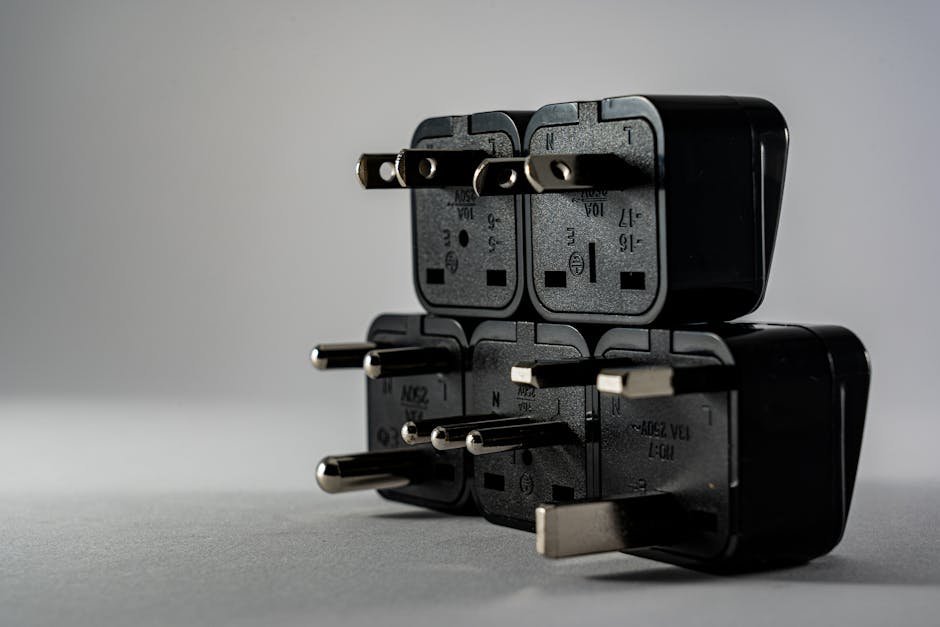
High-power devices like laptops and hair dryers need special consideration. Taiwan’s 110V system impacts how these items perform and whether they need additional equipment beyond a simple plug adapter.
Can I Charge My Laptop?
Yes, absolutely. Most modern laptop power bricks are dual-voltage, meaning they automatically adapt to 110V or 220-240V. You only need a plug adapter to fit the Type A/B outlets. For instance, a MacBook Pro charger or a Dell XPS charger will typically have "Input: 100-240V~" printed on it. If your laptop charges via USB-C, a universal adapter with a high-wattage USB-C PD port (30W or more) can often replace your bulky original power brick, offering a lighter and more convenient charging solution. This simplifies packing significantly.
What About Hair Dryers and Styling Tools?
This is where caution is needed. Many hair dryers, curling irons, and straighteners are *not* dual-voltage. They are often single-voltage appliances designed for high wattage in a specific region (e.g., 220-240V for Europe). Using a 220V hair dryer in Taiwan’s 110V outlets will result in very weak performance — it might barely heat up or blow air. If you must bring one, ensure it’s explicitly rated "dual voltage" or "100-240V." Otherwise, you’ll need a heavy-duty voltage converter, which is often more trouble than it’s worth. Many hotels in Taiwan provide hair dryers, or you can purchase an inexpensive one locally for your trip. Prioritize checking into your accommodation and seeing what’s available before resorting to bringing a high-wattage styling tool.
Pre-Trip Checklist: Power Prep for Taiwan
Before you even pack your bags, a quick inventory of your electronics and their power requirements will save you immense hassle. This proactive approach ensures you have every necessary component for a seamless charging experience in Taiwan.
Start by laying out all the electronic devices you plan to bring. This visual inventory helps identify any outliers or forgotten items. Consider not just the device itself, but also its specific charging cable and power brick. Many devices share similar charging methods, but some have unique needs. Thinking through your daily charging routine will also help determine if a single universal adapter with multiple ports is sufficient, or if you might need a secondary, smaller adapter for a specific purpose.
It’s also a good practice to test your main travel adapter and any critical cables before departure. A faulty cable or a malfunctioning adapter at home is an inconvenience; abroad, it can be a significant problem. Charge a few devices using your travel setup to ensure everything is working correctly. This simple step eliminates potential hardware failures as a source of charging issues while you’re traveling. Remember, the goal is to enjoy Taiwan, not to troubleshoot power problems.
Device Inventory and Power Requirements
List every electronic item: phone, tablet, laptop, smartwatch, camera, portable power bank, headphones. For each, check the small print on its charger or power brick. Look for the "Input" voltage range. As noted, "100-240V, 50/60Hz" means it’s globally compatible and only needs a plug adapter for Taiwan. If it states a single voltage (e.g., "110V only" or "220V only"), then you’ll need to consider if a voltage converter is truly necessary, or if a travel-specific dual-voltage version of the appliance (like a travel hair dryer) is a better investment.
Labeling Your Cables and Adapters
With multiple devices, it’s easy to mix up cables. Use small labels or colored cable ties to identify which cable goes with which device. This is particularly useful for USB cables that look similar but might have different charging capabilities (e.g., a fast-charging USB-C cable versus a standard one). For your travel adapter, clearly mark it as "Taiwan Adapter" or "Universal Adapter" so it’s easily identifiable in your bag. This simple organizational trick saves time and frustration when you’re trying to set up your charging station in a new hotel room.
Don’t be among the 35% who face power problems. With a clear understanding of Taiwan’s electrical standards and a well-chosen universal travel adapter, your devices will stay charged and ready for every moment of your journey.