
You’ve booked the flights, sorted the itinerary, and maybe scored tickets to the Sapporo Snow Festival. Now comes the part that derails most first-timers — packing for a country where the temperature difference between the northernmost and southernmost destinations exceeds 25 degrees Celsius in the same month.
February is genuinely one of the best times to visit Japan. Crowds are low, ski resorts are at peak conditions, and the Snow Festival draws visitors to Hokkaido for a reason. But it demands a smarter packing approach than most months. Here’s how to get it right.
What February in Japan Actually Feels Like by Region
Most packing guides treat Japan as a single climate zone. It isn’t. A Tokyo visitor and a Sapporo visitor in the same week are dealing with conditions roughly equivalent to London versus Reykjavik. Your packing list should reflect where you’re actually going.
| Region | City | Avg High | Avg Low | What This Means for Packing |
|---|---|---|---|---|
| Hokkaido | Sapporo | -1°C / 30°F | -8°C / 17°F | Full arctic kit: insulated parka, waterproof snow boots, heavy gloves |
| Tohoku | Sendai | 6°C / 43°F | -1°C / 30°F | Heavy coat, hat, gloves — non-negotiable |
| Kanto | Tokyo | 10°C / 50°F | 3°C / 37°F | Mid-weight coat, thermal base layer, light gloves |
| Kansai | Osaka / Kyoto | 11°C / 52°F | 4°C / 39°F | Nearly identical to Tokyo — same kit works |
| Kyushu | Fukuoka | 12°C / 54°F | 5°C / 41°F | Light-to-mid jacket, minimal thermal base |
| Okinawa | Naha | 20°C / 68°F | 16°C / 61°F | Light layers only, no winter gear needed |
The Tokyo-to-Sapporo Double Trip
Plenty of February itineraries combine both cities — Tokyo for a few days, then north to Hokkaido for the Snow Festival. This is where packing gets genuinely hard. Sapporo at -8°C overnight is arctic. Tokyo at 10°C is a mild European spring by comparison.
The answer is a modular three-layer system: a thermal base, a compressible insulating mid-layer, and a waterproof shell. Each piece works independently or together. This approach lets you dress for either city without carrying two separate wardrobes.
Rain and Snow Probability
Tokyo averages around 50mm of precipitation in February across 6-7 wet days — mostly cold rain, occasionally a light snow that rarely sticks. Kyoto can get a brief dusting. Sapporo will have significant snow on the ground for your entire stay, with active snowfall on most days. Waterproof footwear is optional in Tokyo and mandatory in Hokkaido.
The Three-Layer Clothing System That Works
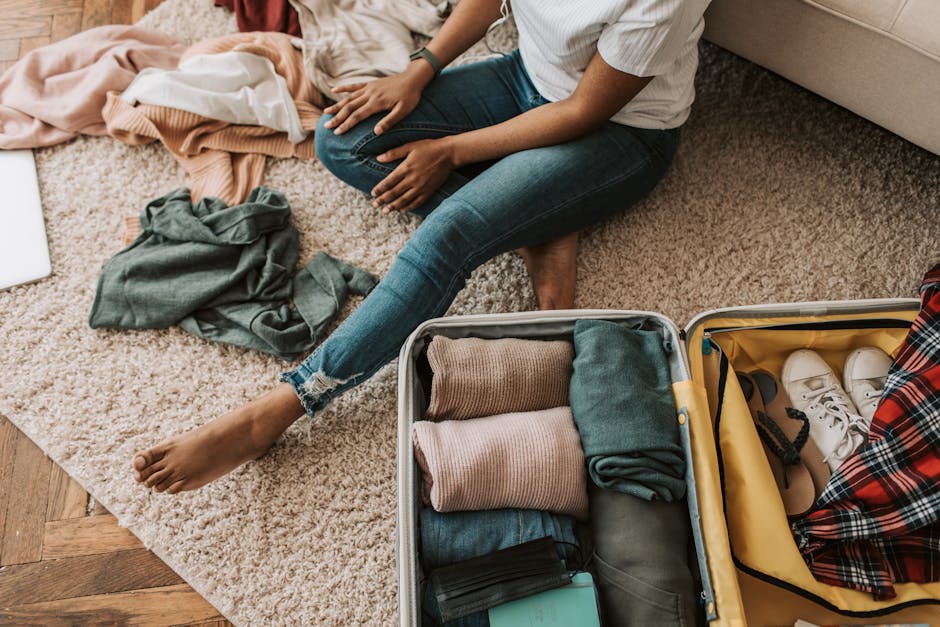
Stop thinking in outfits. Think in layers you can add and remove independently — because Japan’s heated interiors will have you peeling off your coat within 30 seconds of entering any restaurant, train, or temple.
Base Layer: Uniqlo HEATTECH Is the Correct Answer
Uniqlo HEATTECH tops and bottoms are the best-value thermal base layer available anywhere, and you can buy them in Japan if you forget (¥1,500–¥2,000, roughly $10–13). They come in three warmth levels: standard HEATTECH, Extra Warm, and Ultra Warm. Standard works fine for Tokyo. Extra Warm for Tohoku and most of Hokkaido sightseeing. Ultra Warm for extended outdoor time in Sapporo or skiing at Niseko.
Bring 2-3 HEATTECH tops and 1-2 bottoms. They compress to almost nothing, dry overnight hanging in a hotel bathroom, and don’t bulk up under your outer layers.
Mid-Layer: The Uniqlo Ultra Light Down Jacket
The Uniqlo Ultra Light Down Jacket (around ¥5,990 in stores) packs into its own pocket to the size of a paperback book. As a mid-layer under a shell, it adds substantial warmth. On milder Tokyo days, it works alone as your only jacket. For serious warmth-to-weight performance, the Arc’teryx Cerium LT Hoody ($350) and Patagonia Down Sweater ($229) are both excellent — though the Uniqlo version is hard to beat on value, especially if you can pick one up in Japan.
Outer Shell: Match It to Your Coldest Stop
| Shell | Price | Best Suited For | Packability |
|---|---|---|---|
| Uniqlo Blocktech Parka | $80–100 | Tokyo/Kyoto, light rain | Good |
| Columbia Omni-Heat Jacket | $120–180 | Tokyo to Tohoku range | Moderate |
| Outdoor Research Ferrosi Hooded | $199 | Mixed city and snow itineraries | Good |
| Arc’teryx Beta AR | $599 | Hokkaido, serious skiing | Excellent |
The Columbia Omni-Heat is the sweet spot for most Tokyo-Kyoto itineraries — genuinely waterproof, warm enough for 3°C nights, and doesn’t cost a week’s accommodation. If Sapporo or Niseko skiing is on the agenda, the Outdoor Research Ferrosi performs close to the Arc’teryx at less than a third of the price.
Footwear: This Is Where Most People Get It Wrong
Sneakers in Sapporo will be soaked and useless within 20 minutes of walking on packed snow. The sidewalks are icy, the snow is constant, and you’ll be miserable. For Hokkaido, bring waterproof boots with real grip — the Salomon X Ultra 4 Mid GTX ($185) or Merrell Moab 3 Thermo Mid WP ($175) are both practical, look fine with normal clothes, and handle the conditions without being ski boots.
For Tokyo and Kyoto only, waterproof leather Chelsea boots or clean trail shoes with light waterproofing work perfectly well.
Japan-Specific Items Most Packing Lists Miss
The standard travel checklist — passport, charger, adapter — covers the basics. These are the items specific to Japan that change the quality of your trip considerably.
- IC Card (Suica or Pasmo): Load ¥3,000–5,000 onto this rechargeable transit card and tap it on every train, subway, and bus in the country. It also works at convenience store checkouts and some vending machines. Pick one up at any major station or airport on arrival. Buying individual paper tickets every time is slow, confusing, and costs more.
- Pocket WiFi or eSIM: Japan Wireless and IIJmio both rent pocket WiFi from around ¥300–500 per day. Alternatively, buy a Japan eSIM from Airalo before departure — plans typically run $8–15 for 1–3GB and activate instantly. Google Maps navigation in Japan is near-perfect once you’re connected, and you’ll be using it constantly for train transfers.
- Cash in yen: Japan is still significantly cash-dependent outside of central Tokyo. 7-Eleven and Japan Post ATMs reliably accept foreign debit and credit cards. Have at least ¥10,000–20,000 on hand at any time, more in rural areas.
- Compact day bag: You’ll spend most days on foot moving between train stations, shrines, and neighborhoods. The Osprey Daylite (13L, $45) is lightweight and looks neutral. The Peak Design Everyday Sling (6L, $89) works well for a camera-heavy day. Either beats a large hiking pack for urban Japan.
- Kairo hand warmers: Single-use disposable hand warmers are sold at every convenience store in Japan for ¥100–200 per pack. Slip one into each coat pocket before visiting outdoor shrines, temple grounds, or the Snow Festival. They last 8–12 hours and are worth every yen.
- Voltage adapter: Japan runs on 100V with Type A (two-flat-prong) outlets. US plugs fit without an adapter. European, UK, and Australian plugs need a Type A adapter. Most hotels don’t have three-prong outlets — if your laptop charger has a three-prong plug, bring a two-to-three prong adapter.
- Small quick-dry towel: Some restaurants don’t provide paper towels, and public restrooms occasionally run out. A PackTowl Personal in S size ($15) lives in your day bag and earns its keep within the first two days.
Skip These — Japan Has Them Covered
Don’t pack shampoo, conditioner, body wash, toothbrushes, razors, or hair dryers. Every Japanese hotel — from budget capsule pods to mid-range business hotels — provides all of these. Japan’s convenience stores (7-Eleven, FamilyMart, Lawson) stock virtually every toiletry you could forget. Overpacking toiletries is the single most reliable way to waste half a carry-on on a Japan trip.
Your Complete February Japan Packing List
Use this as your final checklist. Adjust the thermal layer warmth level based on your coldest destination.
Clothing
- 3 x Uniqlo HEATTECH tops (Extra Warm if visiting Hokkaido)
- 2 x HEATTECH bottoms
- 3 x thin long-sleeve shirts or t-shirts (worn under HEATTECH in heated spaces)
- 2 x trousers or jeans — quick-dry fabric saves you in a pinch
- 1 x Uniqlo Ultra Light Down Jacket (mid-layer)
- 1 x waterproof outer shell matched to your coldest destination
- 5–7 x socks and underwear
- 1 x warm hat, gloves, and scarf (important in Tokyo, critical in Sapporo)
- 1 x waterproof boots or shoes appropriate to your itinerary
- 1 x lighter shoes for warmer indoor days or Kyushu/Okinawa stops
Electronics and Documents
- Passport (valid at least 6 months past your travel dates)
- eSIM pre-loaded or pocket WiFi rental confirmed
- Suica/Pasmo IC card — get at the airport on arrival
- Power bank, 10,000mAh minimum for a full navigation day
- Two-to-three prong plug adapter if your laptop needs it
Health and Miscellaneous
- Prescription medications — check Japan’s Ministry of Health restricted substances list before travel; some common medications require advance import permits
- Lip balm — Japanese winters are dry indoors and out
- Basic pain relievers — Tylenol-equivalent is available at Japanese pharmacies (look for acetaminophen) but not always clearly labeled in English
- PackTowl Personal S
- Kairo hand warmers — buy in Japan on arrival
Bag Choice
For a 10–14 day trip, the Osprey Farpoint 55 ($180) checks as carry-on on most international routes and includes a detachable day pack. The Nomatic 40L Travel Bag ($299) is a cleaner urban option if you’re staying in cities the whole time. Avoid rolling suitcases — train station stairs and uneven temple paths will make you regret it by day two.
Japan’s station coin lockers (¥300–600 for a full day) are everywhere and cheap. If you’re killing time before check-in or after checkout, lock your main bag and walk free. You don’t need to haul everything everywhere.