
You’re staring at a map of Iceland, trying to figure out if 7 days on the Ring Road is even possible. Short answer: yes, but you have to be smart about it. I did it last summer, and I’ll tell you exactly what worked, what didn’t, and where I’d camp versus book a guesthouse.
Day 1: Reykjavik to Vik — The Golden Circle Squeeze
Most people make the mistake of trying to do the Golden Circle and drive all the way to Vik on day one. Don’t. You’ll be exhausted and miss everything.
I left Reykjavik at 8am, hit Þingvellir National Park first (45 minutes from the city). The Silfra fissure is cool, but if you’re not snorkeling, spend 45 minutes max. Then Gullfoss waterfall — this is the one that actually impressed me. The spray soaked my jacket from 50 meters away. Geysir? It’s a 5-minute stop. The big one erupts every 8-10 minutes. Move on.
By 1pm I was driving south toward Seljalandsfoss and Skógafoss. Both are right off the road. Seljalandsfoss you can walk behind — you will get wet. Bring a waterproof jacket, not an umbrella.
Arrived in Vik around 5pm. Stayed at Vik Camping (3500 ISK per person, showers included). The town has a small grocery store and a gas station with surprisingly good hot dogs.
| Stop | Time Needed | Worth It? |
|---|---|---|
| Þingvellir | 45 min | Yes, for the history |
| Gullfoss | 1 hour | Absolutely |
| Geysir | 20 min | Meh, skip if tight |
| Seljalandsfoss | 30 min | Yes, walk behind it |
| Skógafoss | 30 min | Yes, climb the stairs |
Day 2: Vik to Hofn — The Black Sand and Glacier Day
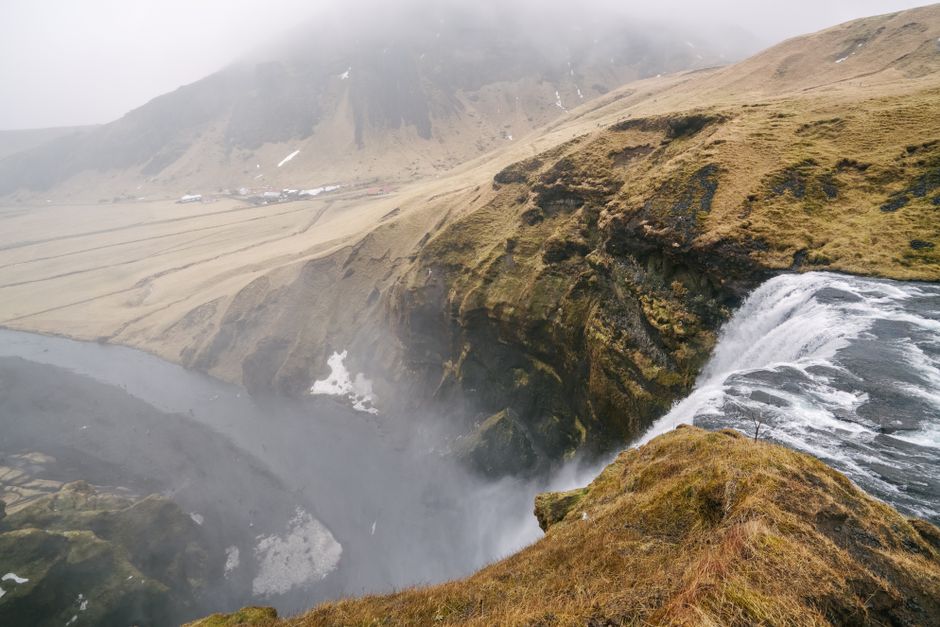
This was my favorite driving day. The landscape shifts from green fields to black sand to glacial lagoons. It’s about 4.5 hours of driving, but you’ll stop constantly.
Start at Reynisfjara black sand beach before the crowds. The basalt columns are impressive, but watch the waves — they’re called “sneaker waves” for a reason. I saw someone get soaked up to their waist.
Next, Fjaðrárgljúfur canyon. It’s a 15-minute walk from the parking lot to the viewpoint. The canyon is 100 meters deep and looks like something from another planet. This is not a “drive-by” stop — park and walk.
Lunch in Kirkjubæjarklaustur (yes, that’s the real name) at the local gas station. The lamb soup was 2200 ISK and better than any restaurant meal I had in Reykjavik.
Afternoon: Jökulsárlón glacier lagoon and Diamond Beach. These are 5 minutes apart. The icebergs floating in the lagoon are massive — some the size of cars. Seals sometimes swim between them. Diamond Beach has iceberg chunks washed up on black sand. Photographers go crazy here at sunset.
Stayed at Hofn Camping (3000 ISK, basic but clean). Hofn is known for langoustine, but I skipped it — 6000 ISK for a small plate felt steep.
Day 3: Hofn to Egilsstaðir — The Longest Drive
This is the stretch people underestimate. It’s 5 hours without stops, and there’s almost nothing between Hofn and Egilsstaðir. Fill your gas tank in Hofn. I’m serious. There’s one station in Djúpivogur, but it closes at 6pm.
The drive hugs the coast with mountains on one side and the ocean on the other. Stokksnes is worth a detour — a black sand peninsula with the Vestrahorn mountains behind it. Entry is 900 ISK, and it’s a gravel road. My rental car handled it fine, but I wouldn’t take a low-clearance sedan.
Arrived in Egilsstaðir by 4pm. The town itself is nothing special, but it’s the gateway to the east fjords. I stayed at Egilsstaðir Camping (3500 ISK, has a kitchen and laundry). Pro tip: do your laundry here. You won’t find another reliable washing machine until Akureyri.
Day 4: Egilsstaðir to Mývatn — Waterfalls and Volcanic Landscapes
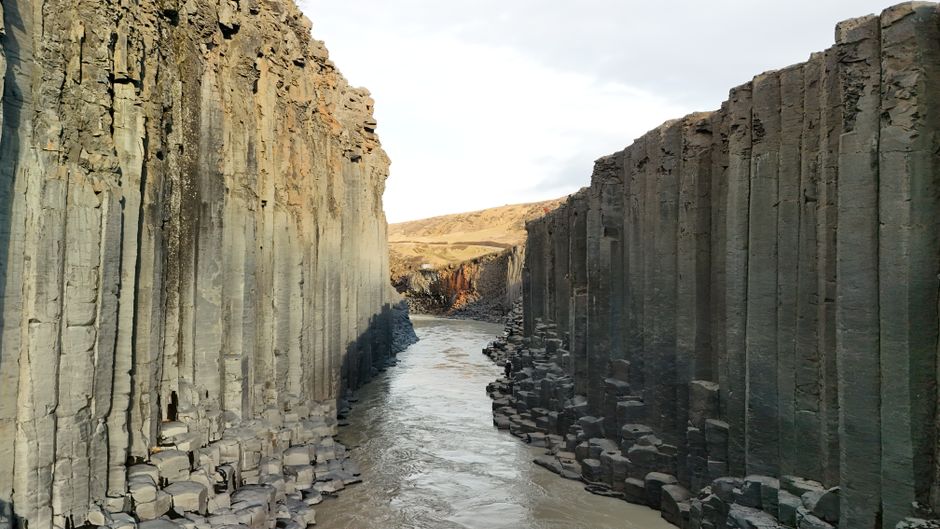
Short driving day — only 2.5 hours. But you’ll want time at Dettifoss, Europe’s most powerful waterfall. The road to the east side (862) is paved now. The west side (864) is still gravel. Both lead to the same waterfall, but the east side gets you closer to the spray. You’ll feel the ground shake.
Then Hverir — a geothermal area that smells like rotten eggs and looks like Mars. The ground is boiling mud. Stay on the marked paths. Someone ignored that rule a few years ago and fell through.
Mývatn itself is a lake with pseudo-craters and ridiculous bird life. I spent an hour at Dimmuborgir lava fields — the rock formations look like a collapsed castle. Free entry.
Camped at Bjarg Camping (4000 ISK, hot tub included). The Mývatn Nature Baths are 5500 ISK and less crowded than Blue Lagoon. I’d pick them every time.
Day 5: Mývatn to Akureyri — The Capital of the North
Only 1.5 hours to Akureyri. But stop at Goðafoss on the way — it’s literally right off the road. The waterfall is 30 meters wide and has a historical story: the law-speaker Þorgeir threw his pagan statues here after Iceland converted to Christianity.
Akureyri is a real town with real restaurants. I had fish and chips at Brynja (1800 ISK) and walked the botanical gardens — free and surprisingly lush for the Arctic. The church on the hill has a stunning stained glass window.
If you have time, take the ferry to Hrisey Island. It’s 20 minutes each way, 1500 ISK for the car, and the island has a population of 180 people. Quietest place I’ve ever been.
Stayed at Akureyri Camping (3500 ISK, best showers of the trip).
Day 6: Akureyri to Borgarnes — The Troll Peninsula and Snæfellsnes
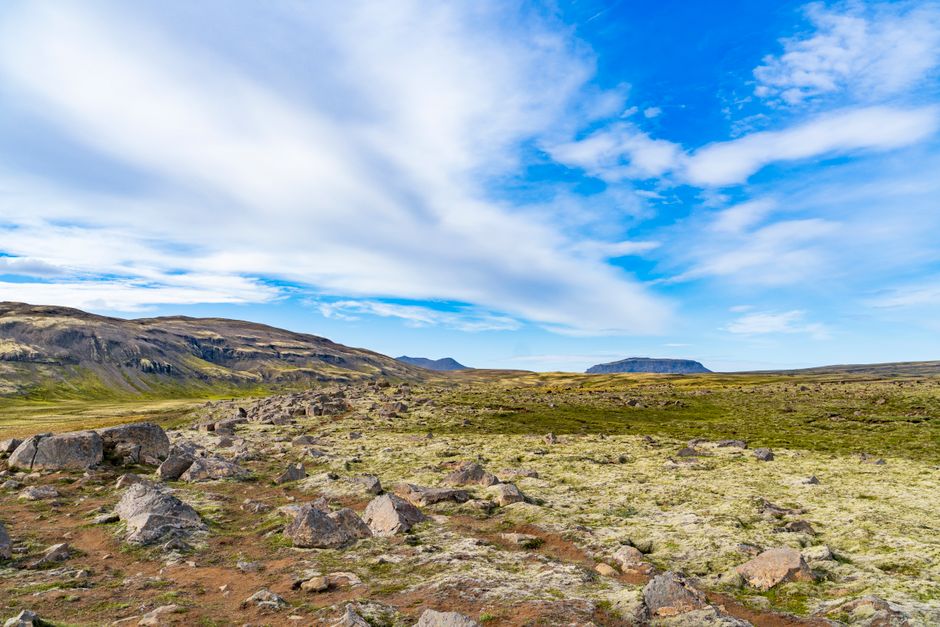
This is the day you decide: do you drive the direct route (4 hours) or take the Snæfellsnes Peninsula detour (adds 3 hours)? I took the detour. Worth it.
The drive down the Troll Peninsula (Route 76) is stunning — mountains dropping straight into fjords. Stop at Hvitserkur, a 15-meter-tall rock formation that looks like a dragon drinking water. It’s a 2km gravel road off Route 711.
Snæfellsnes: Kirkjufell mountain is the most photographed in Iceland. The waterfall next to it (Kirkjufellsfoss) makes the composition perfect. Parking is 700 ISK.
Then Snæfellsjökull National Park — the glacier-covered volcano Jules Verne wrote about. The road around the peninsula is paved except for a 10km gravel section near Arnarstapi. I drove it in a standard 2WD car. Fine, but slow.
Arrived in Borgarnes at 8pm. Stayed at Borgarnes Camping (3200 ISK, small but well-equipped).
Day 7: Borgarnes to Reykjavik — The Final Loop
Just 1.5 hours back to Reykjavik. But don’t just drive straight. Stop at Hraunfossar and Barnafoss — two waterfalls that are 10 minutes apart. Hraunfossar is a series of waterfalls emerging from a lava field. Unique.
Then Deildartunguhver, Europe’s most powerful hot spring. It pumps out 180 liters of boiling water per second. You can see it, but you can’t touch it — it’s 100°C. The town of Reykholt nearby has a medieval writing school where Snorri Sturluson wrote the Prose Edda. Small museum, 1000 ISK.
Back in Reykjavik by 2pm. If you have energy, the Perlan Museum has a real ice cave inside. 4900 ISK, but you don’t need to drive to a glacier to see one.
Dropped the car at Blue Car Rental (they were the only ones who didn’t charge me extra for gravel road coverage). Total damage: 285,000 ISK for 7 days including full insurance.
What I’d Do Differently
Three things I’d change if I did it again.
Skip the Blue Lagoon. 8,000 ISK for a crowded pool with silica mud? The Mývatn Nature Baths cost less and have fewer people. Or go to Secret Lagoon in Flúðir — 3,000 ISK, natural, and actually feels like a hot spring.
Book campsites in advance. I didn’t, and two nights I ended up at overflow fields. Vik Camping fills up by 4pm in July. Use campingcard.is to prepay and guarantee a spot.
Bring a physical map. GPS works 80% of the time. The other 20%, you’re in a fjord with no signal and a paper map is the difference between finding your campsite and sleeping in the car.
Bottom line: 7 days on the Ring Road is tight but doable if you move fast and don’t linger at every waterfall. Pick your top 3 must-sees, plan around them, and let the rest be bonus. I’d do it again tomorrow.