
Kyoto is the cultural heart of Japan. But in 2026, the city saw over 40 million visitors, many of whom spent hours queuing for selfies at bamboo groves and golden pavilions. This 4-day itinerary for 2026 is designed for the traveler who wants genuine cultural immersion — not a photo-op checklist. You’ll visit fewer sites, stay longer at each, and move against the tourist flow.
This is not a sponsored guide. Every recommendation is based on personal visits between 2026 and 2026, adjusted for 2026 opening hours and pricing. All costs are in JPY and approximate.
Day 1: The Eastern Hills — Temples, Tea, and Timing
Most visitors start at Kinkaku-ji (Golden Pavilion). That is a mistake. The bus queues there at 9 AM are 45 minutes long. Instead, start at Nanzen-ji, a massive temple complex that opens at 8:30 AM and sees 80% fewer tourists before 10 AM. Entry: ¥600. Allow 90 minutes.
The Philosopher’s Path at 7 AM
Walk the 2-kilometer Philosopher’s Path from Nanzen-ji north toward Ginkaku-ji (Silver Pavilion). Do this before 9 AM. In April, cherry blossoms line the canal. In November, maple leaves turn the path red. In July, it is humid but empty. The path takes 30-40 minutes at a slow pace.
Ginkaku-ji: The Underrated Pavilion
Ginkaku-ji (¥500, open 8:30-5:00) is often skipped because Kinkaku-ji is more famous. That is a mistake. Ginkaku-ji’s dry sand garden and moss garden are more serene. The sand cone, called Kogetsudai, is raked every morning. Spend 45 minutes here. Then walk back downhill to Eikan-do temple (¥600), which has a three-story pagoda with city views. Most tourists miss it.
| Site | Entry Fee | Best Visit Time | Typical Wait |
|---|---|---|---|
| Nanzen-ji | ¥600 | 8:30 AM | None |
| Philosopher’s Path | Free | 7:00-9:00 AM | None |
| Ginkaku-ji | ¥500 | 9:30 AM | 5-10 min |
| Kinkaku-ji | ¥400 | 3:00 PM (late) | 30-45 min |
Day 2: Fushimi Inari and the Art of Going Sideways
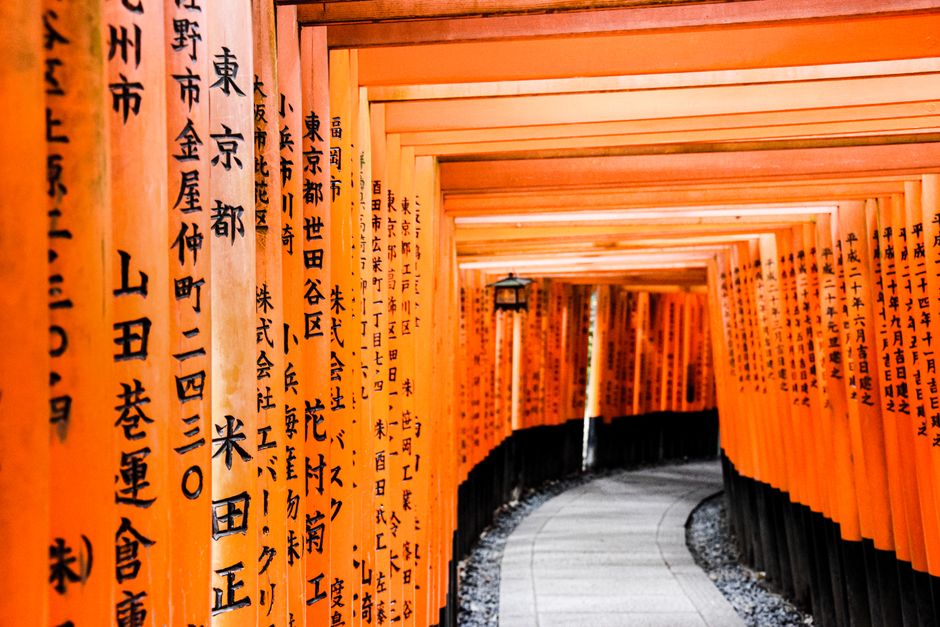
Fushimi Inari Taisha is Kyoto’s most-visited site. The main path up the mountain is packed from sunrise to sunset. The solution is not to go at dawn — everyone already does that. The solution is to go sideways.
Arrive at 3:30 PM. Walk the main path for 10 minutes, then turn onto the Yokomichi (side path) at the first major fork. This path has 90% fewer people. It winds through bamboo and small shrines. You will see fox statues, stone lanterns, and almost no other tourists for 20 minutes. Then loop back to the main path at the fourth station. Total time: 90 minutes. Entry: free.
Common mistake: Trying to hike the entire 4-kilometer loop. It is steep, takes 2-3 hours, and the upper sections have no restrooms. Do the lower loop. You have seen enough torii gates by the half-hour mark.
Nishiki Market at 5:30 PM
From Fushimi Inari, take the JR Nara Line to Kyoto Station (5 minutes, ¥150). Walk 10 minutes north to Nishiki Market. Most stalls close at 6:00 PM, so arrive by 5:30. Try tako tamago (grilled octopus with quail egg, ¥500) and yuba (tofu skin, ¥300-400 per skewer). Do not eat at the sit-down restaurants here — they overcharge tourists. Eat standing at the stalls.
Day 3: Arashiyama — The Bamboo Grove Is Not the Point
The Arashiyama Bamboo Grove is 200 meters long. At 10 AM, you will shuffle through it with 300 other people. The real value of Arashiyama is what surrounds it.
Take the Randen tram from Omiya Station (¥230, 25 minutes) — it is cheaper and more scenic than the train. Exit at Arashiyama Station. Walk directly past the bamboo grove entrance (do not stop) toward Okochi Sanso, the villa of actor Denjirō Okochi. Entry is ¥1,000 but includes matcha tea and a sweet at the villa’s tea house. The garden has maple trees, a bamboo grove, and views of the Katsura River. No crowds. Allow 90 minutes.
Tenryu-ji Temple: The Garden You Actually Pay For
Tenryu-ji (¥500) has a pond garden designed by Muso Soseki, a 14th-century Zen master. Sit on the veranda for 15 minutes. Do not walk through. The garden is meant to be viewed from one spot. Most tourists walk past it in 5 minutes. They miss the point.
When to skip Arashiyama entirely: If you only have 3 days, skip Arashiyama and spend day 3 in Uji (30 minutes south of Kyoto). Uji has Byodo-in temple (¥600), the building on the 10-yen coin, and the best matcha in Japan at Nakamura Tokichi (set meal ¥1,500). Fewer tourists, better tea, same ancient vibe.
Day 4: Gion — Geisha, Not Tourist Shows
Gion is Kyoto’s geisha district. The main street, Hanami-koji, is a tourist zoo after 10 AM. The correct approach is to visit at 6:30 AM. Walk Shinbashi-dori, the canal street that runs parallel to Hanami-koji. At 7 AM, you will see maiko (apprentice geisha) walking to their morning lessons. Do not take photos of them — it is considered rude and is technically illegal in some alleys. Just watch. It is free.
The Gion Corner Trap
Gion Corner is a 1-hour show that includes tea ceremony, flower arrangement, and a short dance. It costs ¥3,300. It is designed for tourists. The tea ceremony is 10 minutes. The dance is 15 minutes. You get a better tea ceremony at En Tea House (¥2,000, 45 minutes, reservation required) near Kodai-ji temple. The instructor explains the history, the tools, and the three sips. That is the real experience.
Kennin-ji Temple: The Dragon Ceiling
Kennin-ji (¥600) is the oldest Zen temple in Kyoto (1202). The main hall has a ceiling painting of two dragons by Koizumi Junsaku. It is 16 meters across. Most tourists skip it because it is not on the main Gion strip. It is a 5-minute walk from Hanami-koji. Allow 30 minutes. The rock garden behind the hall is quieter than Ryoan-ji’s and costs ¥400 less.
Common Mistakes That Ruin a Kyoto Trip
Three mistakes cost travelers time and money more than anything else.
Mistake 1: Buying a bus pass. The Kyoto City Bus One-Day Pass (¥700) seems like a deal. But the buses are so crowded in peak season that you will wait 20-30 minutes for a bus that is already full. The subway (¥210-350 per ride) is faster and more reliable. Use the subway for north-south routes. Walk or taxi for east-west. A taxi from Kyoto Station to Gion costs about ¥1,200 and takes 10 minutes.
Mistake 2: Eating near temples. Restaurants within 200 meters of major temples charge 30-50% more. A bowl of ramen that costs ¥800 on a side street costs ¥1,200 at a temple-adjacent restaurant. Walk one block away. Use Google Maps to find restaurants rated 4.0+ with fewer than 50 reviews — those are neighborhood spots, not tourist traps.
Mistake 3: Booking a geisha show online. Many websites sell tickets to “authentic geisha performances” for ¥10,000-¥15,000. These are often staged shows with actresses, not actual geiko or maiko. Real geisha entertainment requires a personal introduction from a regular client. Stick to public performances at Gion Kaikan Theater (¥3,500, 6 PM and 7 PM shows), which are genuine but cheaper.
Final recommendation: For a first-time visitor who wants culture over crowds, this 4-day plan covers the essential temples, a real tea ceremony, and the bamboo grove without the stress. Skip the bus pass. Eat away from temples. Go early or late. You will see more in less time.